


News
Manual vs Automatic Slack Adjusters: Which Fits Your Fleet?
If you run trucks, buses or minibuses with drum brakes, the slack adjuster is one of the smallest parts on the vehicle — and one of the most safety-critical. It converts the pushrod force from the brake chamber and keeps the running clearance between the brake shoe and the drum at the right distance. When the clearance grows too wide, pedal travel increases and braking efficiency drops. Two designs exist on the market: manual slack adjusters and automatic slack adjusters. Choosing the right type for your fleet affects both maintenance cost and road safety.
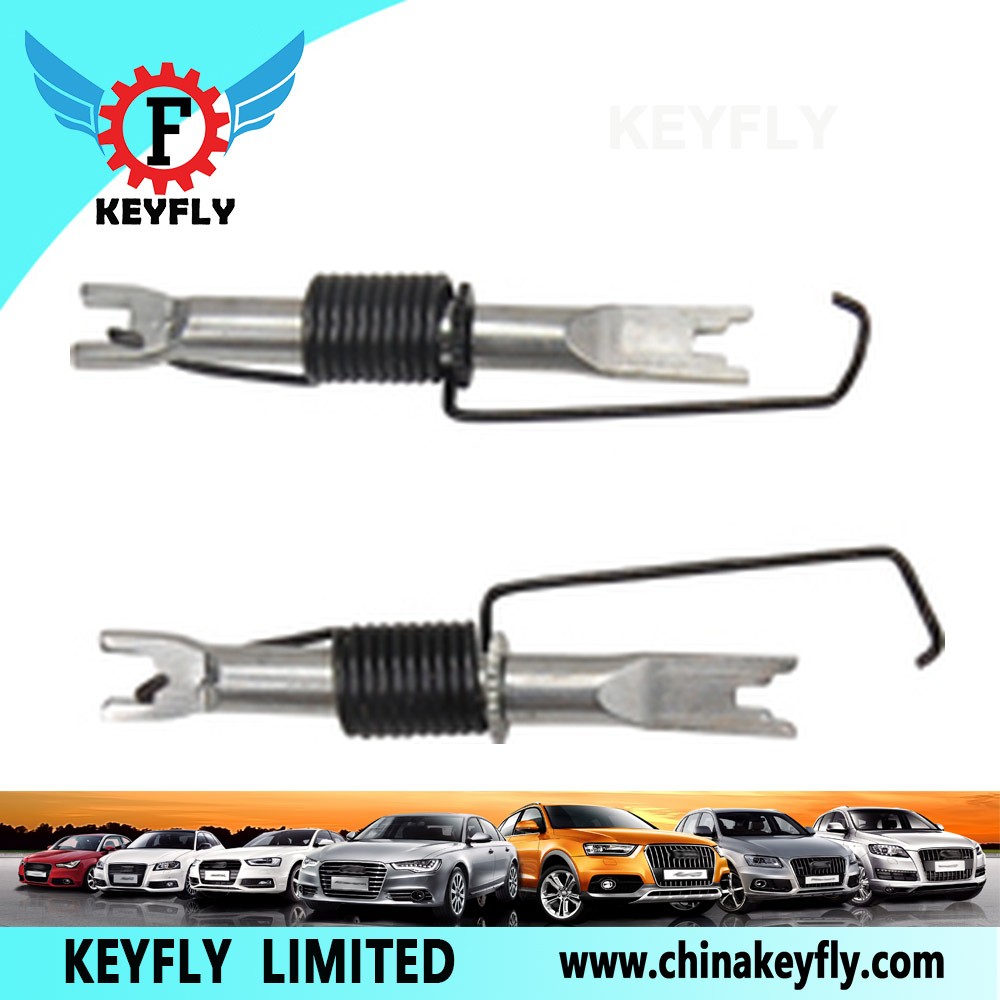
What a Slack Adjuster Actually Does
Every time the driver presses the brake pedal, the brake chamber pushes a pushrod, and the slack adjuster turns the camshaft so the shoes press against the drum. As friction material wears down, the gap between shoe and drum widens. The slack adjuster compensates for this wear by shortening the effective pushrod stroke. If it fails to do that, the stroke becomes too long — a common cause of failed brake inspections and uneven braking between axles.
Manual Slack Adjusters
Manual adjusters are the traditional design. A mechanic must adjust them by hand, usually with a wrench on the adjusting bolt, at set service intervals. They are simple, inexpensive and easy to source, which is why they are still widely fitted on older trucks and in many emerging markets.
- Advantages: low purchase cost, simple structure, no extra components that can fail.
- Risks: safety depends entirely on workshop discipline. Incorrect adjustment — either too tight or too loose — is common when vehicles are serviced outside organized fleets, and a misadjusted manual adjuster can overheat the drum or extend stopping distance.
Automatic Slack Adjusters
Automatic (self-adjusting) slack adjusters correct the shoe-to-drum clearance during every brake application, with no manual input. They keep the pushrod stroke consistent through the life of the linings, which shortens reaction lag between axles and keeps braking performance even as parts wear.
- Advantages: consistent clearance, fewer service interventions, lower risk of human error.
- Limits: higher unit price, and they still need regular inspection — a seized worm gear or worn clutch mechanism stops the self-adjustment even though the adjuster looks fine from outside.
Which Type Fits Your Fleet?
The decision usually comes down to three factors:
- Vehicle specification: match what the chassis was built for. Mixing designs on one axle can cause uneven braking between wheels.
- Workshop capability: if your drivers and mechanics are trained to check pushrod stroke on a schedule, manual adjusters are workable. If service is irregular, automatic adjusters reduce risk.
- Budget per vehicle: automatics cost more upfront but often pay back through fewer brake-related breakdowns and longer lining life.
For wholesalers supplying truck and bus operators, both types move steadily. Fast-moving references for the African aftermarket include adjusters for Toyota Hiace, Hilux, Quantum, Land Cruiser and Nissan pickup applications, plus the matching repair kits. Always cross-check the OE number stamped on the housing — for example, Toyota adjusters commonly carry references in the 47061/47062 series — before quoting a replacement. You can browse the KEYFLY brake adjuster range for current models, or contact us with an OE number for a cross-reference.
About KEYFLY LIMITED
KEYFLY LIMITED (www.chinakeyfly.com) is a professional exporter of automotive spare parts — air filters, car locks and ignition switches, brake slack adjusters, body parts and wiper blades — serving distributors and wholesalers in Africa, South America, and Southeast Asia. Contact: vicky@chinakeyfly.com


